I’ve tried every diet out there and felt worse each time.
You’re probably here because you’re tired of conflicting advice about what to eat. One expert says carbs are the enemy. Another swears by them. It’s exhausting.
Here’s what I learned: diets don’t work because they’re not built for real life. They’re built to sell books.
I spent years figuring out what actually makes people feel good and stick with it. Not what sounds impressive in a headline.
This article gives you practical ways to eat better without turning your life upside down. I’ll show you how to build habits that last and actually make you feel energized.
The advice here comes from established nutritional science. Not trends. Not quick fixes. Just what works for long-term health.
You’ll learn how to cut through the noise, make better food choices, and build a relationship with eating that doesn’t feel like a constant battle.
We call these nutrition hacks shmgnourishment. Simple changes that add up.
No meal plans. No restrictions. Just real strategies you can use today.
The Foundation: Prioritizing Whole Foods
I’m tired of seeing people overcomplicate nutrition.
You know what drives me crazy? Everyone’s obsessed with cutting things out. No carbs. No sugar. No dairy. No fun.
They’re so focused on what they can’t eat that they forget about what they should be eating.
Here’s what I want you to understand about whole foods.
What Are Whole Foods?
They’re just foods in their natural state. Or as close as you can get.
Fruits. Vegetables. Whole grains. Lean proteins. Legumes.
Nothing stripped down. Nothing processed into oblivion. Just real food.
Why They Matter
Whole foods are packed with what your body actually needs. Vitamins. Minerals. Fiber. Antioxidants.
They support your digestion. They give you real energy that lasts (not that 3pm crash you get from a candy bar).
But here’s the part most people miss.
The Satiety Factor
The fiber and nutrients in whole foods keep you full. Actually full.
You eat an apple and you’re satisfied for hours. You eat a bag of chips and you’re hungry again in twenty minutes.
That’s not willpower. That’s biology.
When you build meals around whole foods, you stop craving the processed stuff. Not because you’re forcing yourself to resist. Because your body is getting what it needs.
Try This: The Add Don’t Subtract Method
Stop thinking about what to eliminate.
Instead, add one more serving of vegetables or fruits to what you’re already eating. Just one.
Tomorrow, do it again.
This is what I call nutrition hacks shmgnourishment. Small moves that actually stick.
Mastering Macronutrients for Balanced Energy
Everyone tells you to count your macros.
Track every gram of protein. Measure your carbs down to the decimal. Weigh your fats on a kitchen scale.
But here’s what nobody wants to admit.
Most people who obsess over macro ratios end up more confused than when they started. They’re so busy hitting exact percentages that they forget to actually eat real food.
I’m going to show you a different way to think about this.
Protein for Strength and Fullness
Protein does two things really well. It helps your muscles recover after you work them hard. And it keeps you full longer than any other macronutrient.
You don’t need to overthink this part.
Chicken breast, salmon, tofu, lentils, Greek yogurt. Pick what you actually like eating. If you hate fish, don’t force yourself to choke down tilapia three times a week just because some fitness influencer said so.
Your body doesn’t care if your protein comes from animals or plants. It just needs enough to do its job.
Smart Carbohydrates for Fuel
Here’s where people get it wrong.
They think carbs are the enemy. Cut them out completely and watch the fat melt off, right?
Wrong.
Your brain runs on glucose. Your muscles need glycogen to perform. Carbs aren’t bad. The type of carbs you choose matters.
Oats, quinoa, brown rice, sweet potatoes. These break down slowly and keep your energy steady for hours. Compare that to a bagel or white bread, which spike your blood sugar and leave you crashed out an hour later.
The difference isn’t calories. It’s how your body processes them.
Healthy Fats for Brain and Hormone Health
The low-fat craze of the 90s did more damage than we realized.
People still think eating fat makes you fat. It doesn’t work that way. Your brain is literally made of fat. Your hormones need fat to function properly.
Avocados, almonds, chia seeds, olive oil. These aren’t just okay to eat. They’re necessary.
I’ve seen people cut fat too low trying to lose weight. Their skin gets dry. Their mood tanks. Their sleep goes sideways. All because they believed a myth from three decades ago.
The Balanced Plate Model
Forget counting macros for a second.
Look at your plate. Half of it should be vegetables that aren’t starchy. Think broccoli, spinach, peppers, not potatoes. One quarter gets your protein source. The other quarter is your complex carb.
That’s it.
No app required. No food scale. Just visual portions that work in real life (even when you’re eating at your desk or grabbing dinner after work).
This approach from nutrition hacks shmgnourishment gives you the macro balance you need without turning every meal into a math problem. You can adjust based on how you feel and what your body tells you.
Some days you’ll need more carbs. Some days more protein. That’s normal.
Hydration and Micronutrients: The Details That Matter
You’ve heard it a thousand times.
Drink more water. Eat your veggies.
But nobody tells you WHY it actually matters beyond some vague idea that it’s “healthy.”
I’m going to be honest with you. Most people walk around mildly dehydrated and wonder why they feel like garbage by 2pm. They blame their job or their stress or their age.
It’s usually just water.
When you’re properly hydrated, your brain works better. Your digestion runs smoother. Your skin doesn’t look like you’ve been living in a desert. These aren’t small things.
Some experts will tell you the 8×8 rule (eight 8-ounce glasses) is outdated. That it’s too simplistic.
Maybe. But you know what? Most people aren’t even hitting THAT baseline. If you’re active or live somewhere hot, you need more. If you sit in air conditioning all day, maybe less. Your body will tell you if you pay attention.
Here’s what I think matters more than perfect calculations.
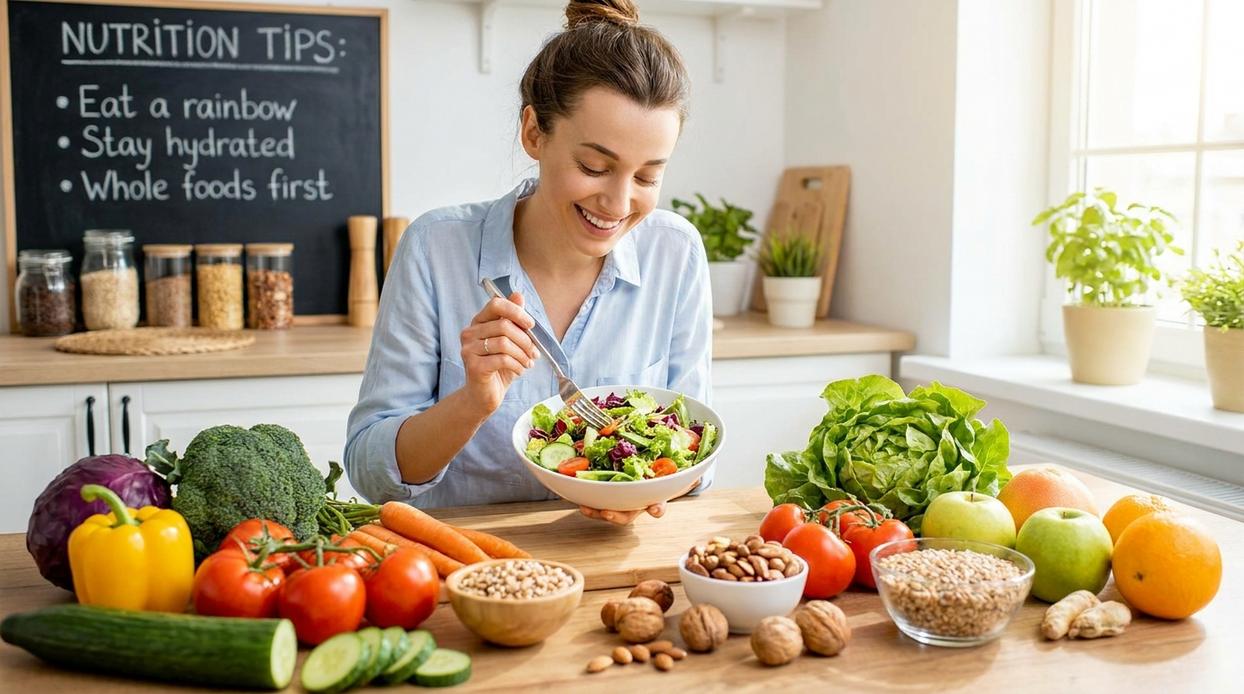
The colors on your plate.
Red tomatoes give you lycopene. Orange carrots pack beta-carotene. Dark greens deliver folate and iron. Purple cabbage? Anthocyanins. Each color represents different vitamins and minerals your body needs (and yes, this is one of those nutrition hacks shmgnourishment actually backs up with science).
I keep a water bottle on my desk. Not because I’m disciplined. Because I’m lazy and it’s RIGHT THERE.
For dinner tonight, count the colors on your plate. If you can’t get to three different vegetable colors, you’re leaving easy wins on the table.
The shmgnourishment nutrition guide by springhillmedgroup breaks this down further if you want specifics.
But start simple. Water bottle. Three colors.
Mindful Habits for a Healthier Relationship with Food
You know how you can drive home and not remember a single turn you made?
That’s how most of us eat.
We shovel food in while scrolling through our phones or watching Netflix. Then we look down and the plate’s empty. We barely tasted anything.
Mindful eating is different. It’s about actually paying attention to what you’re putting in your mouth. No distractions. Just you and your food.
Think of it like this. Your stomach is trying to send you text messages about when it’s full. But if you’re eating too fast, those messages get delayed. By the time they arrive, you’ve already eaten three slices past comfortable.
When you slow down and chew thoroughly, you give your body time to catch up. The signal that says “hey, I’m good” actually reaches your brain before you overdo it.
Here’s something I’ve noticed. Most people can’t tell the difference between real hunger and just being bored or stressed. Real hunger builds slowly. It’s physical. Your stomach actually feels empty.
Emotional eating? That hits you fast. It’s in your head more than your gut.
Try this. Pick one meal today. Put your phone in another room. Turn off the TV. Just eat. Notice the texture. The smell. How the flavors change as you chew.
It feels weird at first (I know, sitting alone with your thoughts and a sandwich). But you’ll be surprised what you notice. Like which nut helps you sleep shmgnourishment or how certain foods actually make you feel.
Your body knows what it needs. You just have to listen.
Your Journey to Sustainable Nourishment
You’re tired of diets that promise everything and deliver nothing.
I get it. Diet culture makes eating healthy feel like solving a puzzle with missing pieces.
This guide cuts through that confusion. You now have a clear path to nourish your body without the restriction and rules that never stick.
The difference is simple. When you focus on whole foods and balanced macronutrients instead of chasing the next trend, your body responds. You feel better and the changes last.
Mindful eating practices work because they’re built on how your body actually functions. Not on what some influencer says you should do.
Here’s your next step: Pick one tip from this article and start this week. Just one.
Maybe it’s adding more protein to breakfast. Maybe it’s prepping vegetables on Sunday. Whatever speaks to you.
Small changes compound over time. That’s how you build real health that sticks.
nutrition hacks shmgnourishment gives you the tools and information you need. Now it’s about taking action.
Start small. Stay consistent. Watch what happens.
 Lorven Dolthane is the founder of Shmgnourishment.com, a platform dedicated to advancing men’s health, nutrition, and lifestyle awareness. With a vision to simplify wellness for modern men, he established the brand to deliver practical, research-informed insights across fitness, diet, and everyday performance. His leadership is rooted in the belief that men deserve clear, actionable guidance to improve their physical health, mental resilience, and overall quality of life.